
Top Signs You Need Air Duct Cleaning Service – Don’t Ignore These
Dust on your registers isn’t the first sign your ducts need cleaning. It’s closer to the last. By the time dust is settling visibly on the grilles, the debris load inside your trunk lines has been building, compressing, and recirculating for months. The signs that matter most arrive earlier, and most of them live inside the system where nobody looks. Here are the ones we actually watch for, starting with the quiet mechanical clues and moving toward the obvious.
If reading this makes you want a second opinion rather than a DIY project, call (833) 482-7267. We’ll take a look and tell you what we find.
Key Takeaways
- Uneven airflow between rooms, faster filter loading, and rising static pressure are early mechanical signs, not cosmetic ones.
- A five-minute flashlight check of your visible supply plenum can reveal buildup before it spreads.
- The type of odor you smell tells you what kind of contamination you’re dealing with.
- Allergy symptoms that track your HVAC run cycles are more telling than seasonal complaints.
- One renovation project is enough to justify a full cleaning, no matter when you last had one.
1. Uneven Airflow Between Rooms
Start with the simplest test you can run yourself. Pick two supply registers that sit roughly the same distance from the air handler. Hold your hand in front of each one while the system runs. If one pushes air with noticeably more force than the other, something is restricting the weaker branch. Sometimes it’s a damper position or a crushed flex run. Just as often, it’s accumulated debris adding resistance inside the duct.
Homeowners in Somerton notice this most in upstairs bedrooms and rooms at the end of a long duct run, where the pressure has the furthest to travel. It’s easy to write off as “that room has always been cold.” It usually hasn’t. Pay attention to whether the difference is getting worse over time.
Airflow imbalance is also one of the few signs you can catch without opening anything up, which makes it worth checking a few times a year. If one room has quietly become the problem room, that’s your cue. When the imbalance comes with visible debris or a rumbling return, it’s time to stop guessing and have someone look inside.
2. Your Filter Is Loading Faster Than It Should
Your filter has a rated replacement interval printed on the packaging, and most filters are designed to last a set number of months. If you find yourself changing it well ahead of that schedule – say every few weeks instead of every few months – the filter is doing its job. The problem is what’s feeding it. A filter that clogs early is catching debris that shouldn’t be reaching it in that volume, typically because the ducts upstream are shedding material into the airstream.
A filter loading early also forces your blower to work against more resistance, and that resistance shows up as increased static pressure in the system. You don’t need a gauge to notice the effect: the system runs longer, the house doesn’t quite keep up, and the blower sounds strained. Once filter changes become a monthly chore, it’s worth having a professional measure static pressure and check the duct interior in Somerton rather than simply buying filters in bulk.
3. A Five-Minute Flashlight Check of Your Supply Plenum
This is the inspection most homeowners never do, and it’s the one that tells you the most. The supply plenum is the box or duct section directly above or beside your air handler where the conditioned air first enters the duct system. It’s usually visible and, in many systems, accessible with a screwdriver.
With the system off, shine a flashlight into the visible opening and look at the interior surfaces. What you’re checking for:
- A uniform film of fine gray dust – normal, low-level accumulation.
- Thick, fibrous buildup or clumps – debris that’s had time to settle and compress.
- Dark staining or discoloration – moisture or biological activity worth investigating.
- Visible construction grit – drywall dust or insulation fibers from a past project.
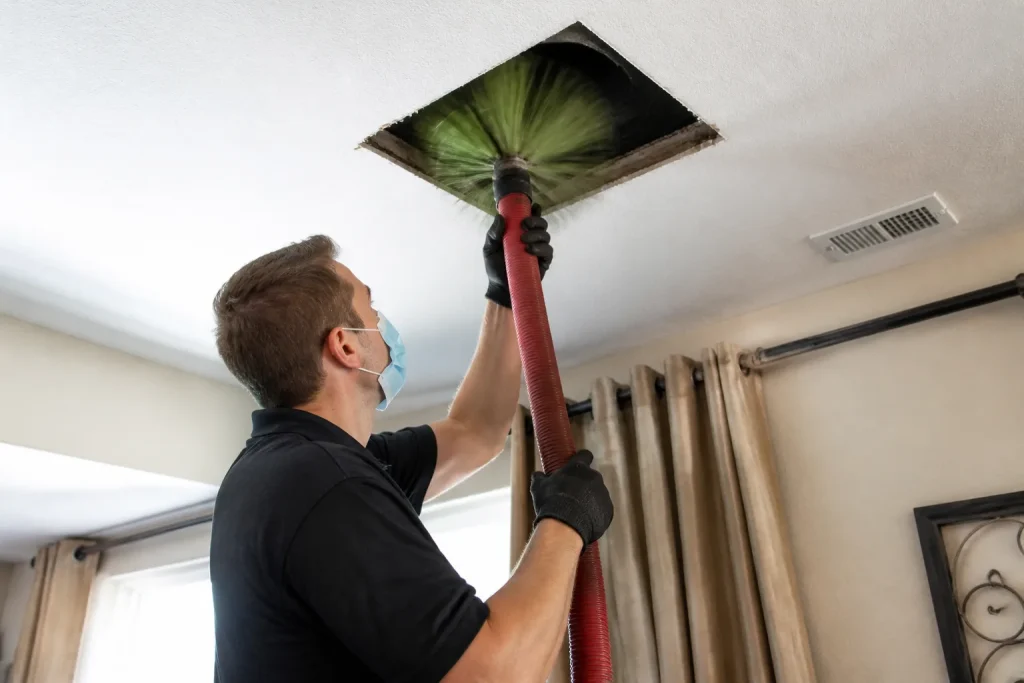
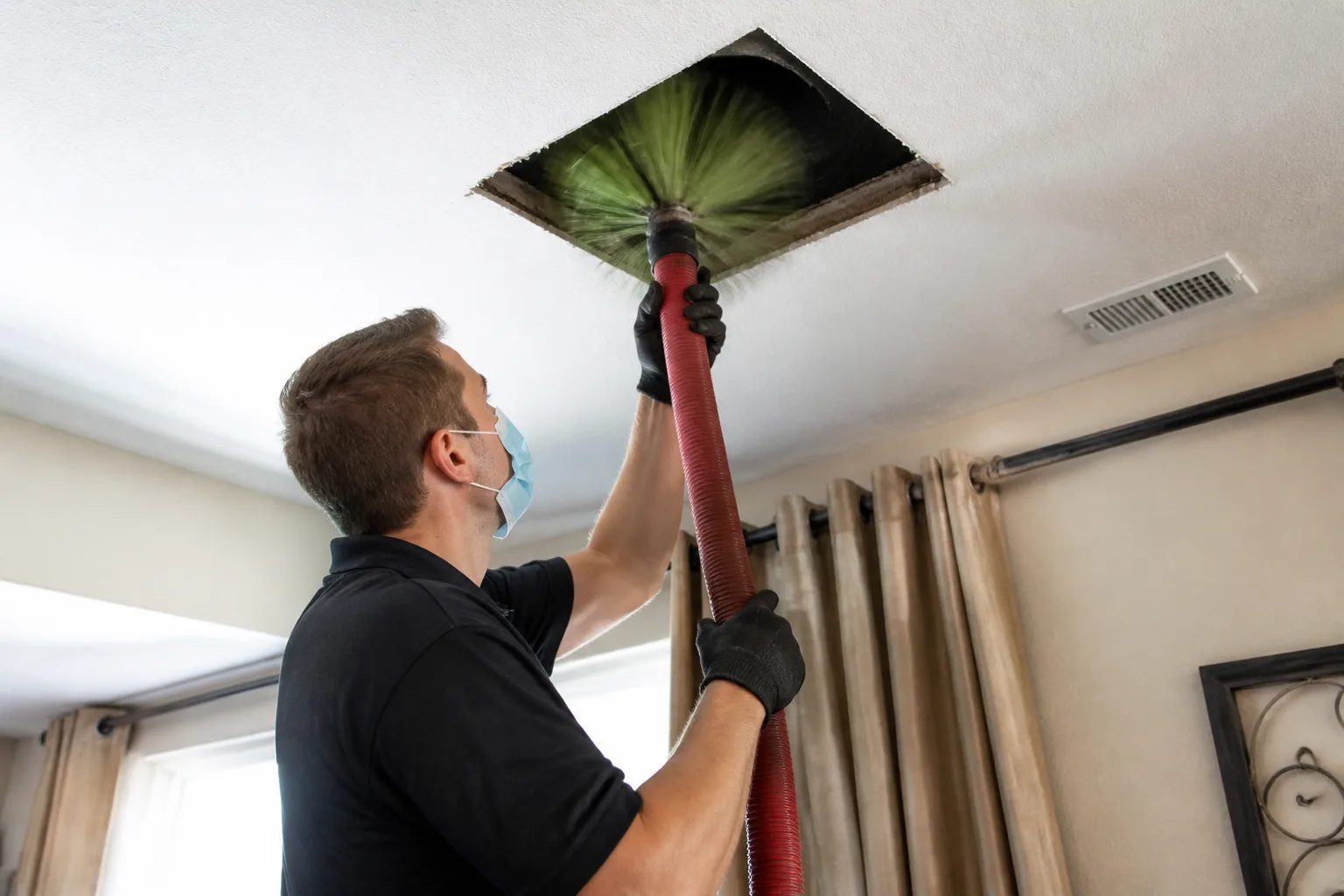
If you see anything beyond the light film, that’s your earliest actionable signal. We use Rotobrush rotary brush systems and Abatement Technologies negative-air equipment because the plenum is exactly where loosened debris needs to be captured, not blown deeper into the house. Do the flashlight check before you book anything – it takes five minutes and tells you whether you have a maintenance issue or a real buildup problem.
4. Odors That Point to Different Contamination Sources
Not every smell means the same thing. The odor you notice is a diagnostic clue, and treating all of them the same way is a mistake. Three types come up most often.
Musty, damp smell. This suggests moisture somewhere in the system – a condensate issue, a leaking duct connection, or humid air collecting in a dead run. Cleaning without finding the moisture source just buys you time.
Burned dust smell. A dry, scorched odor when the heat kicks on usually means dust is burning off the heat exchanger or in the plenum. It can also be an early sign of a mechanical problem, so it’s worth having checked rather than covered up.
Biological or sour odors. These can indicate microbial growth in a damp section of ductwork or on the evaporator coil. This is where sanitizing belongs in the conversation, and where cleaning alone may not be enough.
We sell and service Honeywell and Aprilaire air quality products for exactly this reason – filtration and humidity control address the conditions that let odors return. When you call us in Somerton, tell us the smell you’re noticing. It shapes what we look at first.
5. Allergy Symptoms That Track Your HVAC Run Cycles
Generic respiratory complaints don’t tell you much. Almost everyone has some seasonal allergy nuisance. What’s actually diagnostic is the pattern: symptoms that get worse when the system runs and ease when it’s off. If you notice sneezing or congestion clustering around the times the HVAC kicks on, or waking up worse in a room closest to a supply register, that correlation matters more than the season or the outdoor pollen count.
Pay attention to timing. Seasonal allergies follow outdoor conditions. Duct-related symptoms follow your system. If you can’t tell the difference, keep a rough note of when symptoms flare for a week or two. The pattern usually becomes obvious.
This is the signal that sends most people looking for answers, and the reason duct cleaning and full HVAC system cleaning do different jobs. Cleaning the ducts addresses one pathway; a full-system clean covers the equipment too. If you’ve been chasing a symptom pattern for a while without a clear cause, that’s a fair moment to call a professional rather than keep experimenting.
6. The Post-Renovation Red Flag
Even one home improvement project is enough reason to schedule a cleaning, regardless of when you last had one. Drywall dust, insulation fibers, and sawdust are fine particles that settle everywhere, and the HVAC system pulls them in whether or not you sealed off the work area. A single bathroom remodel or a weekend of replacing baseboards can load a duct system with material a normal filter won’t stop.
The tricky part is that post-renovation debris doesn’t announce itself. Your registers might look clean, your filter might look normal, and the house could smell fine. But drywall dust is heavy and abrasive, and it settles in the lower runs of your ductwork where it gradually gets picked back up into the airstream. If you’ve done any renovation in the past year, it’s worth having someone look. We’ve seen plenty of Somerton homes where a recent remodel was the real reason behind a new airflow complaint.
This is also the moment to look at dryer vent cleaning if your project touched the laundry room. A dryer vent packed with lint is a fire risk, and we treat it that way rather than as an add-on.
When to Call a Pro
You can check airflow, watch your filter, and do the flashlight inspection yourself. But if you see thick buildup in the plenum, notice a persistent odor you can’t place, or your filter is loading monthly, those are signs a full cleaning is worth pricing. Cleaning without proper containment just redistributes debris. That’s why the work needs professional-grade equipment and negative pressure to keep loosened contaminants out of your living space. Our technicians have up to 13 years of experience, and they’ll show you what’s inside before and after.
Related services in Somerton: If your inspection turns up these signs, we offer air duct cleaning as a full-system service, along with HVAC cleaning and dryer vent cleaning for the whole air pathway.
The Bottom Line
Dust on the registers is the last thing you should wait for. The earlier signals are mechanical – uneven airflow, filters loading ahead of schedule, rising static pressure, and that five-minute flashlight check nobody does. Odors and symptom patterns fill in the picture, and a recent renovation is its own reason to look inside. Catching buildup early keeps the job a routine clean rather than a remediation.
If you’re in Somerton and need help, Air Duct Cleaning Somerton offers free estimates – call (833) 482-7267. We answer 24/7. Fast dispatch from 7am to 7pm, Sunday through Friday. You can also start at Air Duct Cleaning Somerton to see the full range of what we do.
Frequently Asked Questions
Most homes benefit from a cleaning every three to five years, but the schedule should follow conditions rather than a calendar. Homes with pets, recent renovations, smokers, or visible buildup in the plenum need attention sooner. Check your plenum with a flashlight and let what you find set the timing.
Ask for before-and-after photos of your own ducts, not stock images. A proper cleaning uses negative-pressure containment so loosened debris is captured rather than recirculated, and the technician should be willing to explain the equipment and show you the result. Call (833) 482-7267 for an exact quote – estimates are free.
They can, especially when symptoms track your HVAC run cycles rather than outdoor seasons. If you notice sneezing or congestion clustering around the times your system runs, that correlation is worth investigating. A professional inspection in Somerton will tell you whether buildup is the likely cause.
Low quotes usually cover surface-level work – wiping registers without real extraction. Proper cleaning uses rotary agitation and negative-pressure capture to remove debris from the whole system. Ask what equipment a company uses before you compare prices. Call (833) 482-7267 for a free estimate that covers the whole job.
Yes, if the project generated drywall dust, insulation fibers, or sawdust. Those fine particles settle into the ductwork and get picked back up into the airstream over time. One project is enough reason to have the system inspected, regardless of when you last had it cleaned.
Written by the team at Air Duct Cleaning Somerton.
Need Air Duct Cleaning Help?
Call Air Duct Cleaning Somerton - the local pro we connect you with is licensed and insured, with free written estimates in Somerton.
(833) 482-7267